
Pharmaceutical Raw Materials
Veterinary API
Antiallergic Drugs
Hormones and Endocrine Drugs
Drug Metabolism
Pharmaceutical Intermediates
Synthetic Anti Infective Drugs
Specialty Drugs
Vitamins and Minerals Medicines
Feed Drug Additive
Antineoplastic Agents
Nervous System Drugs
Respiratory Drugs
Diagnostic Agents
Anti Stress Drugs
Antipyretic Analgesics
Antiparasitic Drugs
Circulatory System Drugs
Biochemicals
Blood System Drugs
Immune System Medication
Pharmaceutical Excipients
Fluid, Electrolyte, and Acid-Base Balance
Urinary System Drugs
Antibiotics
Anesthetic Agents
Inhibitors
Other Chemical Drugs
Digestive System Drugs
CAS:41294-56-8
Molecular Formula:C27H44O2
Alias
More Information
Alphacalcidol; Alfarol; Bondiol; Etalpha; Alpha-Calcidol; One-Alpha; Alfacalcidolum; Oxydevit; 1Alpha-Hydroxy-Vitamin D3; 1-Hydroxyvitamin D3; Un-Alpha
Brief Introduction
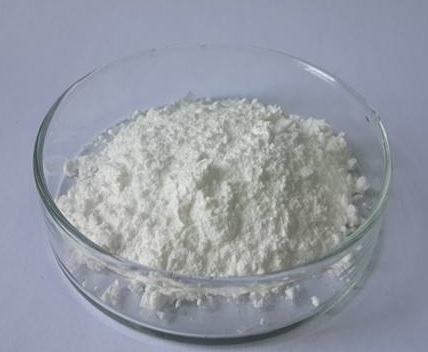
Alfacalcitol is a white crystalline or crystalline powder, insoluble in water and hexane, and soluble in methanol, absolute ethanol, chloroform, dichloromethane, acetone or ether. It is easy to deteriorate in case of air and light. Alfacalcitol was first developed by the American bone health international company . Alfacalcitol is mostly used for calcium metabolism disorder caused by vitamin D metabolism disorder. It is clinically used to treat osteoporosis, chronic renal insufficiency, hypothyroidism, anti vitamin D rickets, osteomalacia, etc.
Suppliers
View More Vendors (3) >
CAS:59-67-6
Molecular Formula:C6H5NO2
Alias
More Information
Pyridine-3-Carboxylic Acid; 3-Pyridinecarboxylic Acid; Beta-Picolinic Acid; Acidum-Nicotinicum; 3-Picolinic Acid; 3-Carboxypyridine; Niacin; Vitamin B3; Vitamin B3 Nicotinic Acid
Brief Introduction
This product is a kind of vitamin medicine, together with nicotinamide, it is called vitamin pp. it can be used for anti pellagra disease, also can be used as blood dilator, and is widely used as an additive in food and feed. As a pharmaceutical intermediate, it is used in the production of isoniazid, nicotinamide, nicotinic acid and inositol nicotinate.
Suppliers
View More Vendors (3) >


CAS:1200-22-2
Molecular Formula:C8H14O2S2
Alias
More Information
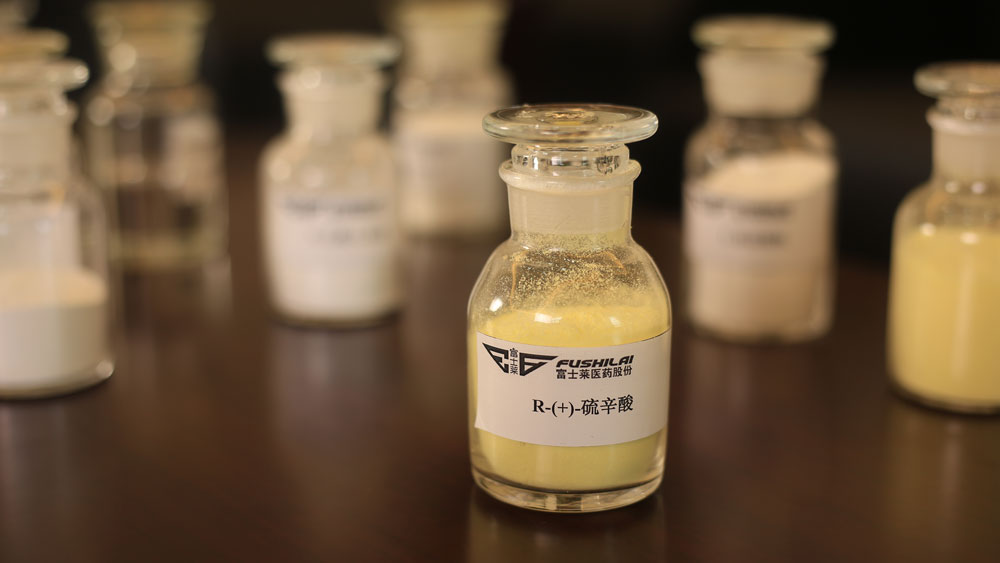
(R)-Lipoic acid; (R)-5-(1,2-Dithiolan-3-yl)Pentanoic acid; R-(+)-Alpha-Lipoic acid; (R)-Alpha-Lipoic acid; Thioctic acid d-form; (R)-(+)-1,2-Dithiolane-3-Pentanoic acid; R-(+)-Thioctic acid; (R)-1,2-Dithiolane-3-Pentanoic acid; Tioctic Acid; D-Thioctic acid; R-Lipoic acid; (R)-6,8-Thioctic acid; 5-[(3R)-Dithiolan-3-Yl]Pentanoic Acid; 5-[(3R)-Dithiolan-3-Yl]Valeric Acid; (R)-1,2-Dithiolane-3-Valeric Acid; R-(+)-Alpha Lipoic Acid
Brief Introduction
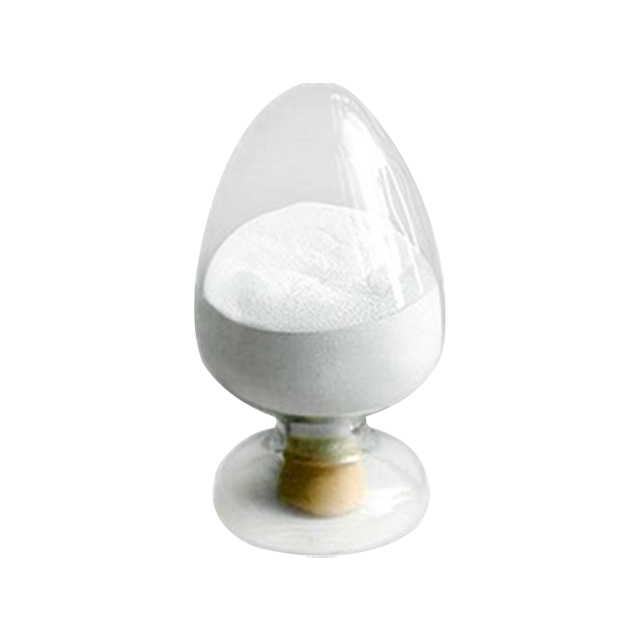
Lipoic acid is an endogenous antioxidant, which can remove the body's free radicals, promote the body's synthesis of vitamin C using glucose, and promote the synthesis of glutathione, effectively remove melanin, and assist coenzyme in physiological metabolism conducive to the body's immunity. Lipoic acid also has anti-inflammatory effect, can inhibit the activities of kinase, transforming factor, tumor necrosis factor and collagenase, and has anti-aging effect. Lipoic acid can preserve and regenerate other antioxidants and has a good health function to human body. It is widely used in the prevention and treatment of heart disease, diabetes, liver disease and Alzheimer's disease. The two enantiomers of lipoic acid showed different biological activities. Among them, R-type enantiomers are more effective than S-type enantiomers, which may be due to the fact that a large amount of R-type lipoic acid can enter cells and mitochondria through cell membrane and mitochondrial membrane and be reduced to dihydrolipoic acid, while only a small amount of S-type can enter cells and be reduced. Dihydrolipoic acid has stronger antioxidant capacity than lipoic acid. The regeneration of endogenous antioxidants and the repair of oxidative damage can only be achieved by dihydrolipoic acid.
Suppliers
View More Vendors (3) >
CAS:6381-77-7
Molecular Formula:C6H7NaO6
Alias
More Information
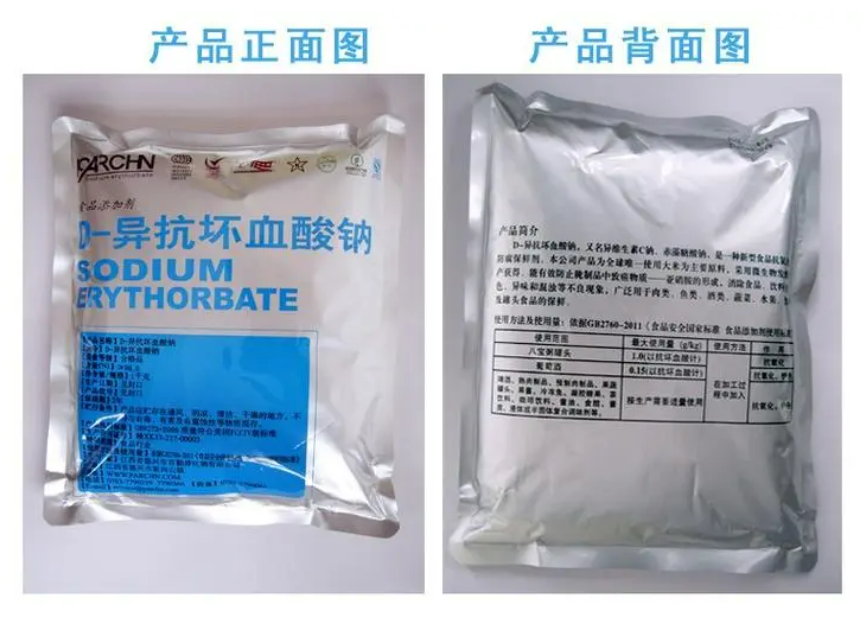
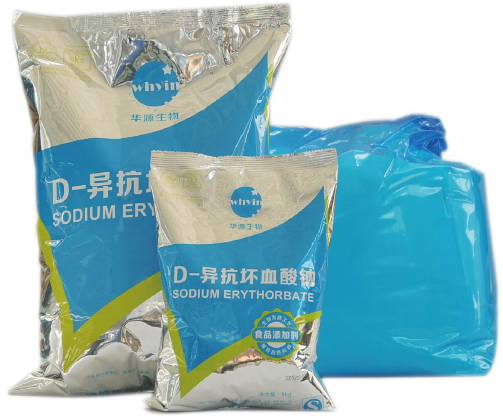
Sodanit; Rat Death Liquid; Penite; Sodium L-Ascorbate; Arsenite,Sodium; Sodium Arsenite; Sodium Metaarsenite; L-Ascorbic Acid Sodium Salt; Prodalumnol Double; Kill-All; Sodium Isoascorbate Monohydrate; Sodium Arsenylate; Sodium Dioxoarsenate; Prodalumnol; 3-Keto-D-Gulofuranolactose; Erbitn; Eribaten; Isoascorbic; Isona; Mercate20; Araboascorbic Acid, Monosodium Salt, D-; Monosodium D-Erythro-Hex-2-Enonic Acid Gamma-Lactone; Sodium;(2R)-2-[(1R)-1,2-Dihydroxyethyl]-4-Hydroxy-5-Oxo-2H-Furan-3-Olate
Brief Introduction
The activity of sodium isoascorbate is only about 1 / 20 of that of ascorbic acid, but it has the same effect on lowering blood pressure, diuresis, hepatic glycogen generation, pigment excretion and detoxification as ascorbic acid. Sodium isoascorbate is mainly used in the food industry, as an antioxidant of food, and is widely used in meat, fish, beer, fruit juice, fruit juice, canned fruits and vegetables, pastries, dairy products, jam, wine, pickles, oils, etc.
Suppliers
View More Vendors (2) >
CAS:67-03-8
Molecular Formula:C12H18Cl2N4OS
Alias
More Information
Thiazolium, 3-[(4-Amino-2-Methyl-5-Pyrimidinyl)Methyl]-5-(2-Hydroxyethyl)-4-Methyl- Chloride, Monohydrochloride; Vitamin B1 Hydrochloride; Thiamine Hydrochloride; Aneurine Hydrochloride; Thiazolium,3-[(4-Amino-2-Methyl-5-Pyrimidinyl)Methyl]-5-(2-Hydroxyethyl)-4-Methyl-Chloride (1:1), Hydrochloride (1:1); Vitamin B1 HCL; Thiamine Hcl; Thiamine
Brief Introduction
Biochemical research, fluorescence and phosphorescence analysis of phosphorus, clinical medicine belongs to vitamin B group, used for the prevention of beriberi, multiple neuritis, central nervous system injury and other diseases.
Suppliers
View More Vendors (2) >
Inquiry (
10
/ 10
)
Clear All
Sign In
Error!