
Feed Additive
Additives For Food Packaging
Colorant
Stabilizer and Coagulator
Water Retention Agent
Feed Deworming Health Agents
Anti Corrosion and Preservation
Color Fixative
Flour Treatment Agent
Defoamer
Coating Agent
Feed Vitamins
Emulsifier
Other Food Additives
Nutritional Fortifier
Thickening Agent
Feed Quality Enhancer
Antioxidants
Chewing Gum Bases
Bulking Agent
Feed Amino Acids and Small Peptides
Flavor Enhancer
Sweeteners
Additives For Feed Preservation
Other Feed Additives
Food Additive
Bleaching Agents
Anticaking Agent
Food Flavors and Fragrances
Enzyme Preparation
Feed Trace Elements
Acidity Regulators
Feed Growth Promoters
Feed Conditioner
CAS:1401-69-0
Molecular Formula:C46H77NO17
Alias
More Information
Vetil; Tylosin base; Tylocine(R); Tylosine; Fradizine; Tylan; Tylosin,Predominantly Tylosin A; Tylocine; Vetil(R); Tylon; Tylosin Tartrate
Brief Introduction
Tylosin is a kind of veterinary macrolide antibiotics commonly used in China, also known as tyronon and tylosin. It can be obtained by fermentation of actinomycetes Streptomyces Freund. There are three forms of tylosin alkali, phosphate and tartrate. The antibacterial spectrum is similar to erythromycin. It has inhibitory effects on Gram-positive bacteria and some Gram-negative bacteria, mycoplasma, Vibrio, coccidia and spirochetes. It is particularly effective on mycoplasma, but its effect on Gram-positive bacteria is not as good as erythromycin. This product is characterized by its strong effect on mycoplasma. It is one of the drugs with the strongest anti Mycoplasma effect among macrolides. As a feed additive, it is widely used in the feed of chickens, pigs, cattle, sheep, fish, shrimp and other animals, which can promote the growth of livestock and poultry and improve the feed utilization rate. It is mainly used to control Mycoplasma disease in chickens, turkeys and other animals; Vibrio dysentery and infectious pleuropneumonia in pigs are also used for enteritis, pneumonia, mastitis and endometritis caused by sensitive bacteria. The effect of subcutaneous injection is better than that of oral administration in the treatment of chicken chronic respiratory diseases. The tissue drug concentration after subcutaneous injection is 2 ~ 3 times higher than that of oral administration, and the maintenance time of effective blood drug concentration is also longer. In addition, tylosin phosphate is also used as a growth promoting drug feed additive for cattle, pigs and chickens. There is cross resistance between this product and erythromycin.
Suppliers
View More Vendors (2) >
CAS:1405-86-3
Molecular Formula:C42H62O16
Alias
More Information
Glycyrrhetinic Acid Glycoside; Glycyrrhizin; Glycyrrhitin; Dermacrin; Glycyrrhizinate; Glycyrrhizic Acid A
Brief Introduction
This product is extracted from the natural plant licorice and is the main active ingredient of licorice. As a drug, it has anti-inflammatory and anti allergic effects; As a sweetener, it is widely used in all kinds of food.
Suppliers
View More Vendors (2) >
EP9.0,Glycyrrhizic acid content (C42H62O16)≥95.0%
/
Pharm Grade
10kg
/
Fibre Drum

CAS:142-62-1
Molecular Formula:C6H12O2
Alias
More Information
N-Hexoic Acid; N-Hexylic Acid; Caproic Acid; Capronic Acid; N-Caproic Acid; Hexoic Acid; Pentylformic Acid; Pentane-1-Carboxylic Acid; N-Hexanoic Acid; Caproic
Brief Introduction
This product is a permitted edible spice. It is mainly used to make cheese, cream, rum and cream hard candy. Application: it is a basic organic raw material, which can be used to produce various caproate products. In medicine, it is used to prepare hexazoxin. It can also be used as thickener of perfume and lubricating oil, rubber processing assistant, varnish drying agent, etc. Application: gas chromatographic analysis standard, organic synthesis, manufacture of esters as artificial flavors, manufacture of rubber and false paint driers.
Suppliers
View More Vendors (2) >
CAS:143-07-7
Molecular Formula:C12H24O2
Alias
More Information
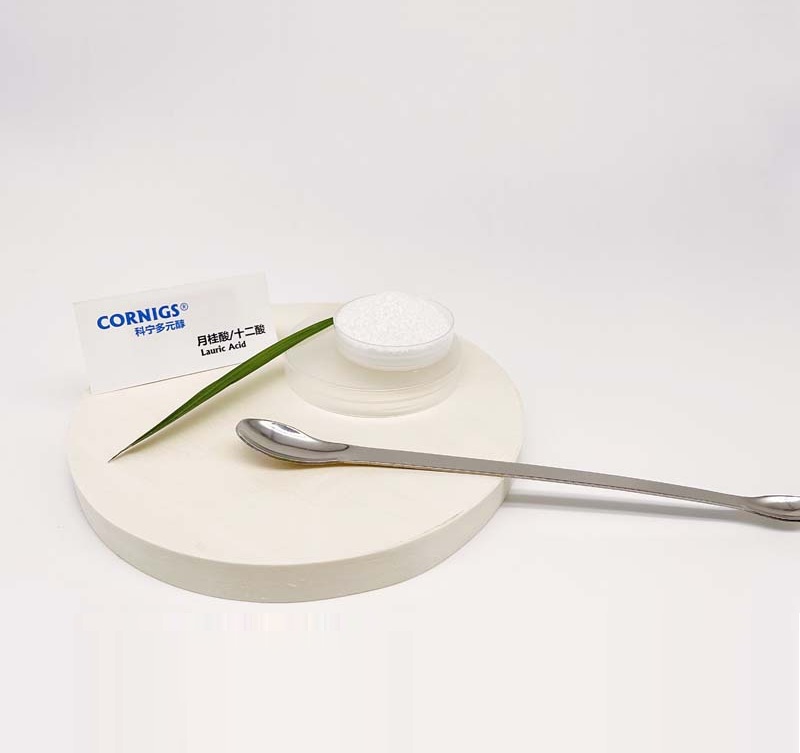
Lauric Acid; Emery651; Dodecanoic Acid(C12); Dodecanoic Acid; N-Dodecanoic Acid
Brief Introduction
Dodecanoic acid is most widely used in surfactant industry. According to the classification of surfactants, dodecanoic acid can be divided into cationic type, anionic type, non-ionic type and amphoteric type. See the attached table of this item for the varieties of dodecanoic acid surfactants. Some surfactants of dodecanoic acid and dodecanol derivatives are also disinfectants, such as dodecyl dimethyl benzyl ammonium chloride (geramine), dodecyl dimethyl benzyl ammonium bromide (Bromogeramine), dodecyl dimethyl (2-phenoxyethyl) ammonium bromide (Domiphen). Dodecyl dimethyl ammonium-2,4,5-trichlorophenol salt in these derivatives can be used as citrus preservative. Dodecanoic acid has many applications in plastic additives, food additives, perfume industry and pharmaceutical industry.
Suppliers
View More Vendors (2) >

CAS:143824-78-6
Molecular Formula:C31H30N2O6
Alias
More Information
N(In)-Boc-Nalpha-Fmoc-L-Tryptophan; Fmoc-L-Trp(Boc); Nα-[(9H-Fluoren-9-Ylmethoxy)Carbonyl]-N1-Tert-Butoxycarbonyl-L-Tryptophan; Fmoc-Trp(Tert-Butyloxycarbonyl)-Oh; Nalpha-[(9H-Fluoren-9-Ylmethoxy)Carbonyl]-N1-Tert-Butoxycarbonyl-L-Tryptophan; N(In)-Boc-Nα-Fmoc-L-Tryptophan; Nα-Fmoc-N(In)-Boc-L-Tryptophan; N1-Boc-Nα-Fmoc-L-Tryptophan; N-Fmoc-Nin-Boc-L-Trp; N-(9-Fluorenyl)Methoxycarbonyl-Trp(Boc)-Oh; Fmoc-L-Trp(Boc)-Oh; Nalpha-Fmoc-N(In)-Boc-L-Tryptophan; Fmoc-Trp(Boc); Fmoc-Tryptophan(Boc)-Oh; Fmoc-Nin-T-Butyloxycarbonyl-L-Tryptophan; Fmoc-N-In-Boc-L-Tryptophan; Fmoc-N-Boc-L-Tryptophan
Brief Introduction
N-alpha-fluoromethoxycarbonyl-N-in-tert butoxycarbonyl-L-tryptophan is a tryptophan derivative that can be used to prepare various organic functional molecules with biological activity. It has a wide range of applications in basic biochemical research, such as the synthesis of solid-phase peptides as reported in relevant literature.
Suppliers
View More Vendors (2) >
Inquiry (
10
/ 10
)
Clear All
Sign In
Error!