
CAS:111-62-6
Molecular Formula:C20H38O2
Alias
More Information
Ethyloleat; Ethyloleate,Nf; Oleic Acid Ethyl; Ethylis Oleas; 9-Octadecenoic Acid (Z)-, Ethyl Ester; (Z)-9-Octadecenoic Acid Ethyl Ester; 9-Octadecenoicacid(Z)-,Ethylester
Brief Introduction
Ethyl oleate is a fatty acid ester formed by the condensation of oleic acid and ethanol. It is a colorless to light yellow liquid. Ethyl oleate is produced by the body during ethanol intoxication.
Ethyl oleate is used as a solvent for pharmaceutical drug preparations involving lipophilic substances such as steroids. It also finds use as a lubricant and a plasticizer.
Ethyl oleate is regulated as a food additive by the Food and Drug Administration under "Food Additives Permitted for Direct Addition to Food for Human Consumption", 21CFR172.515.
Ethyl oleate has been identified as a primer pheromone in honeybees.
Ethyl oleate is one of the fatty acid ethyl esters (FAEE) that is formed in the body after ingestion of ethanol. There is a growing body of research literature that implicates FAEEs such as ethyl oleate as the toxic mediators of ethanol in the body (pancreas, liver, heart, and brain). Among the speculations is that ethyl oleate may be the toxic mediator of alcohol in fetal alcohol syndrome. The oral ingestion of ethyl oleate has been carefully studied and due to rapid degradation in the digestive tract it appears safe for oral ingestion. Ethyl oleate is not currently approved by the U.S. Food and Drug Administration for any injectable use. However, it is used by compounding pharmacies as a vehicle for intramuscular drug delivery, in some cases to prepare the daily doses of progesterone in support of pregnancy. Studies which document the safe use of ethyl oleate in pregnancy for both the mother and the fetus have never been performed.
Suppliers
View More Vendors (2) >
CAS:112-30-1
Molecular Formula:C10H22O
Alias
More Information
1-Decanol; Decyl Alcohol; Decanol; N-Decyl Alcohol; N-Decanol; Capric Alcohol; Nonylcarbinol; Antak; Caprinic Alcohol; Royaltac; Primary Decyl Alcohol; Alfol 10; N-Decatyl Alcohol; Epal 10; Royaltac M-2; Royaltac-85; Alcohol C-10; C8-10 Alcohols; Sipol L10; 1-Hydroxydecane; Kalcohl 10H; C 10 Alcohol; Decyl, N- Alcohol; Decylic Alcohol; Alcohol C10; Unii-89V4Lx791F; Decanol-(1); Lorol C10; 2-Octylethylether
Brief Introduction
Decyl Alcohol is mainly used to make artificial rose oil, orange blossom and Acacia flavour. It is also used to make lubricant additives, plasticizers, adhesives and so on.
Suppliers
View More Vendors (2) >

CAS:112-53-8
Molecular Formula:C12H26O
Alias
More Information
Dodecyl Alcohol; Lauryl Alcohol; Alcohol C12,Dodecyl Alcohol,Lauryl Alcohol; 1-Dodecanol; Dodecanol
Brief Introduction
It is used to manufacture high-efficiency detergents, surfactants, foaming agents, hair creamers, milk selectors, textile oils, fungicides, cosmetics, plasticizers, plant growth regulators, lubricating oil additives and other special chemicals. It is widely used in light industry, chemical industry, metallurgy, medicine and other industrial products. Twelve alcohol has the fragrance of moonlight and violet. It can be used in rose, violet and Lily Narcissus flavor. Chemically stable, it is safe for soap flavors.
Suppliers
View More Vendors (2) >

CAS:112-72-1
Molecular Formula:C14H30O
Alias
More Information
Tetradecan-1-Ol; Myristyl Alcohol; 1-Hydroxytetradecane; 2-Propenoic Acid,N-Tetradecyl Ester; 2-Propenoicacid,Tetradecylester; Acrylsaeure-N-Tetradecylester; Acrylsaeure-Tetradecylester
Brief Introduction
This product can be used as edible flavor and raw material for organic synthesis and surfactant.
Suppliers
View More Vendors (2) >

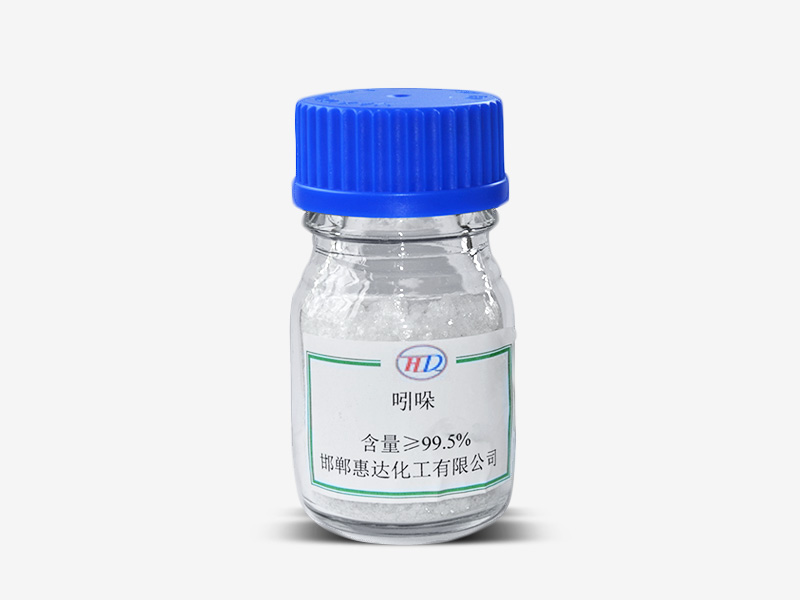
CAS:120-72-9
Molecular Formula:C8H7N
Alias
More Information
1H-Benzo[B]Pyrrole; 1-Azaindene; Ketole; Indole; Benzopyrrole; 2,3-Benzopyrole; 2,3-Benzopyrrole; 1-Benzazole; Indol; Fema 2593; Benzo(B)Pyrrole; Indolegr; 2,3-Benzopyrrole,Orbenzazole,Indole; Indole Crystalline Gr; Indole-15N
Brief Introduction
Indole exists in feces, coal tar, jasmine oil and Neroli oil. It is colorless, lobular or plate-shaped crystal. It has strong fecal odor. The pure product has fresh flower odor after dilution. It is soluble in hot water, benzene and petroleum. It is easily soluble in ethanol, ether and methanol. It can volatilize with water vapor. It turns red when placed in air or visible light, and resinifies. It is weakly acidic and forms salt with alkali metals, It is resinified or polymerized with acid. The highly diluted solution has jasmine fragrance and can be used as perfume. Indole is an important organic raw material and fine chemical product. Its homologues and derivatives widely exist in nature, mainly in natural flower oil, such as jasmine, sweet orange, white lemon, pomelo peel, orange, bitter orange, Narcissus, vanilla, etc. It can be widely used in jasmine, Syringa, orange blossom, gardenia, honeysuckle, lotus, Narcissus, Yilan, orchid, and prune. It is often used in combination with methyl indole to make artificial civet flavors. It can be used in chocolate, raspberry, strawberry, bitter orange, coffee, nuts, cheese, grape and fruit flavor compound.
Suppliers
View More Vendors (2) >
Inquiry (
10
/ 10
)
Clear All
Sign In
Error!